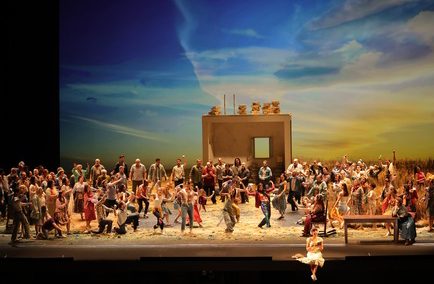
Opera is like Marmite. You either love it, or you’re fairly sure it’s not for you. This performance of Eugene Onegin, recorded at La Scala, definitely sits somewhere in that territory.
This was my first encounter with Tchaikovsky in operatic form and, unlike other operas I’ve experienced, it seemed to lack the obvious “big tunes”. You know the ones: the arias so stirring, beautiful or thunderous that they escape the opera house entirely and end up soundtracking car adverts or being remixed by Ibiza DJs.
And yet — my attention didn’t wander for a moment.
There were times when I found myself distracted by something else entirely: the familiar operatic phenomenon where the young female characters look convincingly youthful, while the “young men” appear… less so. This happens so often in opera that it barely registers anymore.
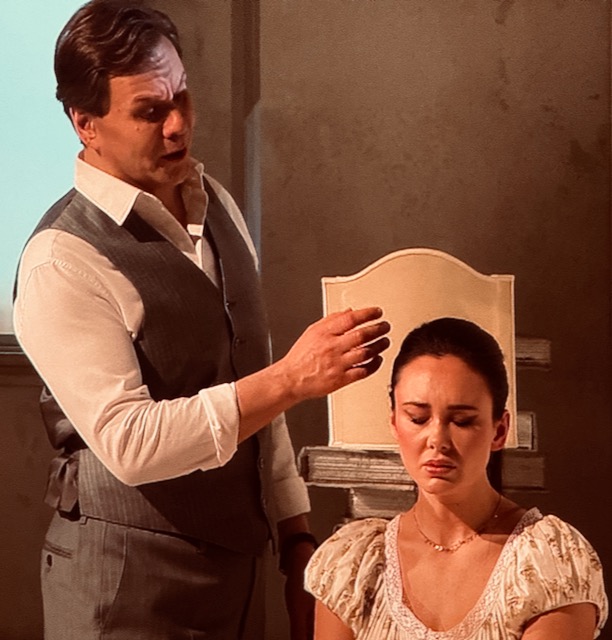
The role of a 26-year-old playboy, adored by an innocent country girl, was sung beautifully — though by a gentleman whose hair I kept checking. Yes. Pretty sure that’s a wig.
Of course, none of this really matters. It’s theatre. And theatre, if nothing else, is about suspending disbelief.
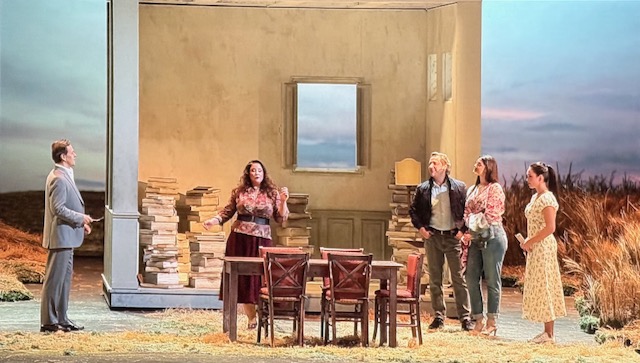
Visually, the production was often magnificent. The lighting was excellent, and the changing sky — from morning through to night — felt like a work of art in its own right. This was very clearly a modern rendering of the opera: wireless headphones, a Jeep, plenty of denim and leather. At first, this was a little confusing, as the story is rooted firmly in 19th-century attitudes — particularly around class, honour, and reputation — and even incorporates religious and social conventions of its time. Still, modern opera productions often ask you to make that leap.
Much of the action centres around Tatiana’s bedroom. She’s a bookworm, lost in romantic novels, and clearly more at home in fiction than in real life. She meets and falls in love with Eugene Onegin — a terrible choice, frankly, for a naïve country girl. She writes him a letter, pouring out her love. He responds by rejecting her, plunging poor Tatiana into despair.
Things get worse. Onegin later flirts — shamelessly, even by modern standards — with his best friend’s fiancée. In this production, the resulting duel is staged as a game of Russian roulette. Onegin’s friend dies, leaving both Onegin and Tatiana even more broken than before. There’s a striking moment where Tatiana’s books catch fire and a building appears to implode — a clear metaphor for the emotional devastation she’s endured.
I won’t spoil the rest of the plot (it’s easily found online), but Tatiana, shunned and wounded, eventually marries well. Naturally, this is precisely the moment when Onegin realises he wants her after all. Men.
It’s worth remembering that this was a film — a recording of a live performance at one of the world’s great opera houses — and very skilfully done. Watching opera on screen isn’t the same as being in the theatre, but it has a real advantage: good direction tells you exactly where to look, and when. For opera newcomers like me, that’s no small gift.
Opera isn’t for everyone. But I can’t help thinking many more people would enjoy a Sunday afternoon performance if it came without airs or graces. The tickets are affordable, the experience surprisingly accessible.
Coming up in March is Lohengrin, followed by Mozart’s Così fan tutte in April. Both are long — most operas are — at around four hours and three hours respectively. Take snacks. Take refreshments. Try something new.
Tickets are available from Pontardawe Arts Centre. You might just surprise yourself and have a good time!
Lohengrin tickets 22nd March 2026
Cosi fan tutte tickets 19th April 2026








 Friends of Pontardawe Arts Centre
Leave a comment